
Popcorn is one of those cozy snacks many of us enjoy during movie nights, and it’s only natural to wonder if our dogs can share a few bites too. If you’ve ever asked yourself, “Can dogs eat popcorn?” you’re definitely not alone. Many pet owners are curious whether popcorn for dogs is safe or could lead to health issues.

Jump to:
The good news is that dogs can eat popcorn in certain situations, but there are some important things to know first. While plain air-popped popcorn may be fine as an occasional treat, not every type of popcorn safe for dogs is created equally. Butter, salt, flavorings, and unpopped popcorn kernels can quickly turn a harmless snack into something that may upset your puppy’s wellness and digestive health.
In my experience, simple foods are usually the safest when sharing human treats with dogs. Let’s take a closer look at whether dogs and popcorn are a good mix, which types are safest, and when popcorn may become a problem.
Can Dogs Eat Popcorn Safely?
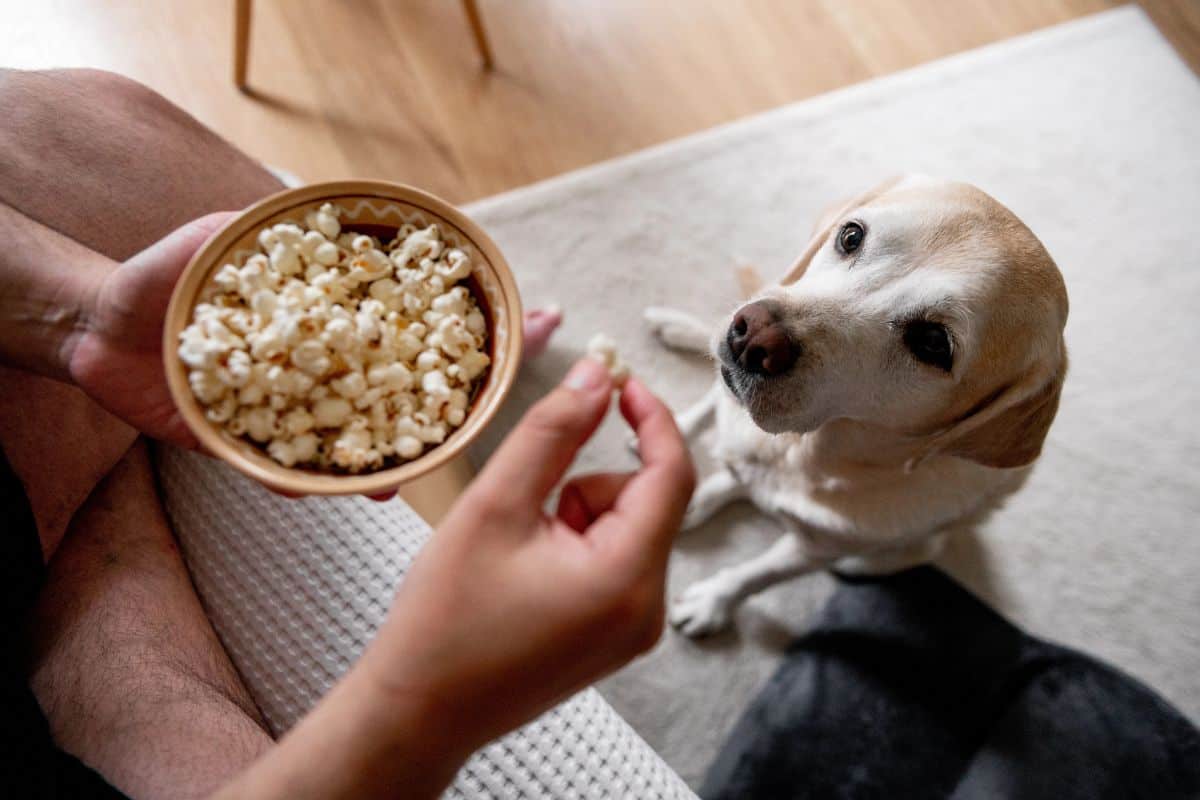
Yes, dogs can eat popcorn safely when it is plain, fully popped, and served in small amounts. Plain air-popped popcorn without butter, salt, oils, or heavy seasoning is generally considered the safest option for dogs to eat as a quick snack.
I’ve noticed many dogs enjoy the crunchy texture of popped popcorn just as much as traditional dog treats. Since popcorn contains small amounts of fiber and minerals, a few small pieces here and there are unlikely to harm a healthy dog.
However, moderation matters. Even though popcorn is a safe option, too much popcorn may still lead to digestive upset or unnecessary weight gain over time. Treats should only make up a small part of your dog’s overall food intake.
When you safely give your dog popcorn, it’s best to offer only a few pieces at a time and monitor how they respond afterward.
Is Popcorn Bad for Dogs?
Many people wonder, “Is popcorn bad for dogs?” The answer depends on the type of popcorn being served.
Plain popcorn is usually not harmful, but heavily flavored varieties can create problems. Microwave popcorn contains oils, artificial flavorings, excess butter, and high levels of salt that may not support your dog’s health or wellness. Some flavored popcorn products even contain ingredients that are unsafe for dogs.
Too much butter and salt may contribute to stomach discomfort, digestive upset, or long-term health issues if fed regularly. In more serious situations, excessive salt consumption could increase the risk of sodium poisoning, especially in small dogs or puppies.
I love how simple snacks often work best for dogs. A little plain air-popped popcorn can feel like a fun treat without adding unnecessary ingredients.

Can Dogs Eat Butter Popcorn?
One of the most common questions owners ask is, “Can dogs eat butter popcorn?” or “Can dogs eat popcorn with butter?” While a tiny accidental bite is unlikely to cause major harm, butter popcorn is not the best choice for dogs.
Butter adds extra fat and calories that can contribute to weight gain and digestive upset. Regularly eating butter-coated popcorn may also cause stomach discomfort or other health concerns over time.
Microwave popcorn is especially tricky because microwave popcorn contains more than just butter. Many products contain artificial flavorings, preservatives, and high sodium levels that are simply not ideal for dogs.
If your dog eats popcorn with butter once by accident, there’s usually no reason to panic. Just keep an eye out for vomiting, diarrhea, or unusual behavior. Offering water and returning to their regular food schedule is often enough for mild cases.
Can Dogs Eat Popcorn With Salt?
Many owners also ask, “Can dogs eat popcorn with salt?” Small traces of salt are usually not dangerous, but salty popcorn should not become a regular treat.
Too much salt may lead to dehydration and could potentially contribute to sodium poisoning in severe situations. Smaller breeds and puppies are often more sensitive to high sodium intake.
When choosing dog popcorn options, plain is always the safest choice. Plain air-popped popcorn without extra toppings is much gentler on a dog’s digestive system than heavily seasoned movie theater popcorn.
I think dogs are usually just happy being included. They rarely care whether the snack is covered in butter or completely plain.
Can Puppies Eat Popcorn?
“Can puppies eat popcorn?” is another important question. Puppies have more delicate digestive systems than adult dogs, so extra caution is needed.
A few tiny pieces of plain popped popcorn may not cause harm, but popcorn kernels can become a choking hazard for a puppy. Unpopped kernels may also create dental problems or discomfort if they become stuck in the teeth.
Because puppies are still developing healthy eating habits, it’s often better to focus on balanced puppy food and veterinarian-approved dog treats instead of human snacks.

If you do offer popcorn to a puppy, keep portions very small and use only fully popped, plain pieces.
Can Dogs Eat Popcorn Kernels?
One of the biggest concerns with dog popcorn involves unpopped popcorn kernels. Many veterinarians recommend avoiding kernels entirely.
Hard kernels can become a choking hazard, especially for small dogs. They may also damage teeth or get lodged between teeth and gums, causing dental discomfort.
Even partially popped kernels may be difficult for some dogs to chew safely. Before sharing popcorn, always remove any hard leftover kernels from the bowl.
I’ve noticed that many accidents happen simply because dogs eat too quickly. Taking a moment to check the popcorn carefully can help keep snack time safer.

Can Dogs Eat Caramel Popcorn?
If you’re wondering, “Can dogs eat caramel popcorn?” the answer is: it’s best to avoid it completely.
Caramel popcorn usually contains high amounts of sugar, butter, oils, and artificial ingredients. Too much sugar is not good for dogs and may contribute to weight gain or digestive upset over time.
Sticky caramel can also cling to teeth, increasing the risk of dental issues. Since caramel popcorn offers very little nutritional value for dogs, it’s safer to choose healthier treats instead.

Is Popcorn Good for Dogs?
Some people ask whether popcorn is actually good for dogs. Plain popcorn itself is not toxic, and it does contain small amounts of fiber and certain minerals. However, it should never replace balanced dog food or nutritious dog treats.
Think of popcorn as an occasional treat rather than a health food. Small pieces of plain popped popcorn can be a fun bonding snack, but moderation is still important.
The safest approach is to keep popcorn simple, plain, and served occasionally.

Final Thoughts
So, can dogs eat popcorn? Yes, dogs can eat popcorn when it is plain, fully popped, and offered in small amounts. Plain air-popped popcorn is generally the safest choice, while buttered, salted, caramel-coated, or heavily flavored varieties are best avoided.
Microwave popcorn may contain ingredients that can upset your dog's stomach, and unpopped kernels can pose choking or dental risks for both adult dogs and puppies.
I’ve always enjoyed those little moments when our dogs sit beside us, hoping for a snack. While popcorn can occasionally be a fun treat, choosing dog-friendly foods and keeping portions small is one of the easiest ways to support your dog’s long-term health and happiness.
FAQ
Dogs can eat very small amounts occasionally, but butter popcorn is not recommended because the extra fat may cause digestive upset and weight gain.
No, popcorn should only be an occasional treat. Too much popcorn may upset your dog’s stomach and add unnecessary calories.
Plain popcorn is usually not dangerous, but heavily salted or flavored popcorn can cause serious health issues in extreme cases. Choking on popcorn kernels is also a risk.
Puppies should have only tiny amounts of plain popped popcorn, and kernels should always be removed to reduce the risk of choking.
Microwave popcorn contains butter, oils, sodium, and artificial flavorings that are generally not healthy for dogs.
A small amount of salt is unlikely to harm most dogs, but heavily salted popcorn should be avoided, as excessive sodium can cause dehydration or sodium poisoning.




Leave a Reply