
There are plenty of reasons why you might need or want to relocate, but moving with dogs to a new home can be far more complicated than it seems. Dogs don’t understand the “why” behind boxes, movers, and new spaces, which can make the process stressful for them—and for you.

Jump to:
So how do you make sure that moving house with dogs goes smoothly, especially if you’re juggling kids, movers, boxes, and chaos all at once?
Understand How Dogs Experience a Move
Imagine uprooting everything you know and being placed somewhere new with unfamiliar smells and sounds. That’s what your pup experiences during a move. It’s not just people who find transitions difficult—pets feel that same sense of uncertainty, especially if they’ve lived in the same home for years or grew up there as puppies.
Parents know to prepare children for a move by explaining what’s happening. But pets can’t understand financial reasons or logistics—they only see their home disappearing piece by piece and new faces entering their safe space. Even the friendliest dogs can become anxious or withdrawn when things change so suddenly.

If you’re moving with large dogs, it can be even more challenging since they often pick up on your emotions and the household’s energy. Keeping them calm and secure is key to avoiding stress-related behaviors.
Create Calm Through Routine and Familiarity
Consistency is your dog’s comfort zone. During the hustle of moving house with dogs, try to maintain their normal feeding, walking, and bedtime routines. This simple structure helps them feel that life is still stable despite all the changes.
Before the move, if possible, bring your dog to explore the new home or yard. Let them sniff around and get used to the scents—this helps them connect the new environment with safety and familiarity. When you first arrive, reward them with their favorite treats or even a little bone broth to create a positive first impression of the new home.
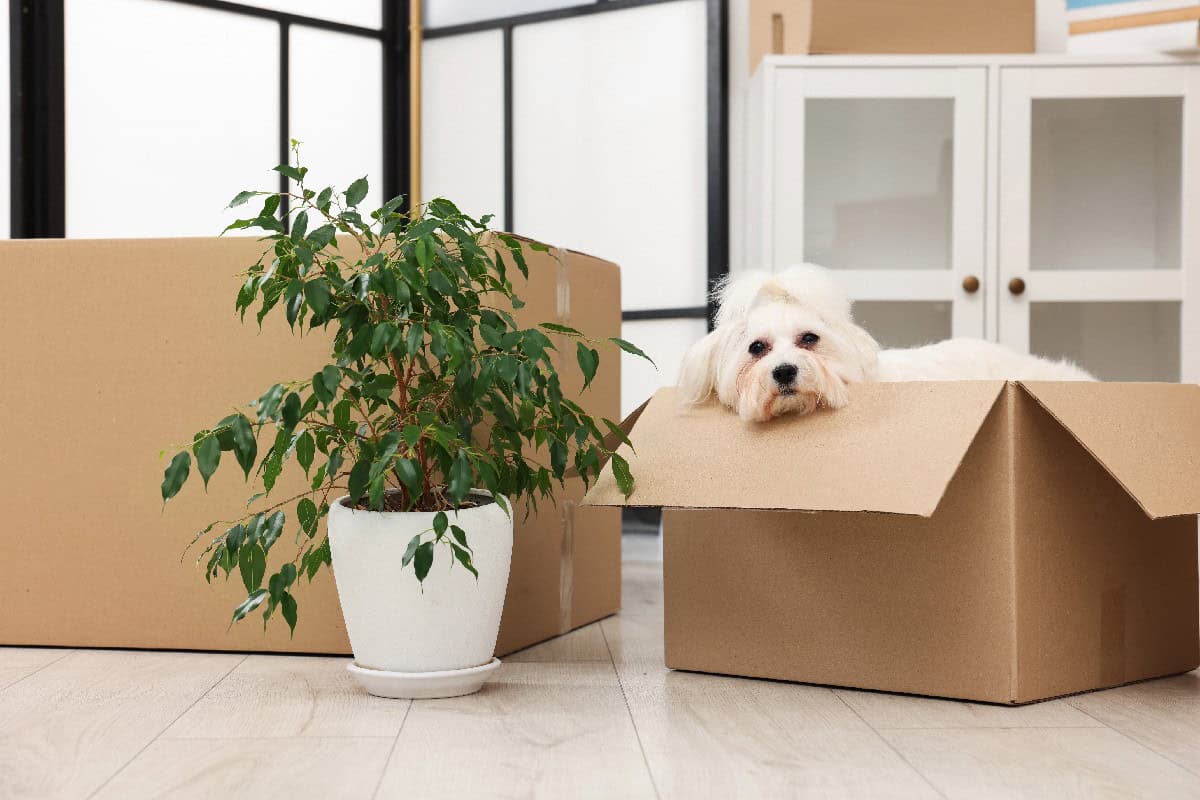
Pack Their Comfort Zone
When moving with dogs, especially long distances or moving overseas with dogs, familiar items are essential. Keep their favorite toys, blanket, or dog bed close during the trip. If you’re driving, give your pup a safe space in the car where they can rest and feel secure amid all the movement.
For those moving with large dogs, space can be limited in the car, so plan ahead—pack their essentials last so you can access them easily. If travel stress is high, consider having your dog stay temporarily with a trusted friend, relative, or pet sitter they already know. This can prevent overstimulation while movers go in and out of the house.

Add Extra Play and Exercise Time
Before and after the move, increase your dog’s physical activity. Dogs release stress through movement, so extra walks or play sessions can make a big difference. Moving with dogs to a new home means lots of sitting in cars or being confined indoors, which can lead to restlessness.
Let them explore safely on a leash, or schedule some time at a local dog park before the move day. If time is tight, hire a dog walker or let a family member handle daily exercise. This is especially helpful if you’re managing multiple pets or moving overseas with dogs, where paperwork and travel arrangements can eat up your time.
A tired dog is a calmer dog, and keeping them active helps reduce nervous energy during the transition.
Update Identification and Microchip Information
Once you’ve moved, double-check your dog’s ID tag and microchip information. A new environment means unfamiliar territory, and even the most obedient dogs might wander off trying to explore. Updating your address and contact number ensures they can be returned safely if lost.
If you’re moving long-distance—or even moving with dogs to Hawaii or abroad—this step is crucial. Different locations have varying regulations, so confirm any vaccination or quarantine requirements before you move.
Planning these details ahead gives you peace of mind and keeps your furry friend safe, no matter where your new adventure takes you.

Set Up a “Dog Zone” in the New Home
Once you’ve arrived at the new place, unpack your dog’s belongings first. Designate a corner or room just for them—complete with their bed, toys, and bowls. This helps them claim the space as their own and feel settled more quickly.
Keep the same daily routine for at least a week to allow them to adapt. If your dog seems anxious or clingy, give them extra love, slow introductions to new rooms, and calm reassurance. Even subtle home noises like a different refrigerator hum or outside traffic can take time to adjust to.
Final Thoughts: Moving With Dogs Made Easier
With patience and preparation, moving with dogs doesn’t have to be chaotic. Whether you’re moving with large dogs across the country or relocating down the street, structure, calm energy, and familiar comforts go a long way.
By keeping routines stable, planning ahead, and showing plenty of affection, you’ll help your pup settle into their new home in no time. Remember: the journey might be messy, but the reward is a happy, well-adjusted dog ready to explore their new world right beside you.




Leave a Reply