
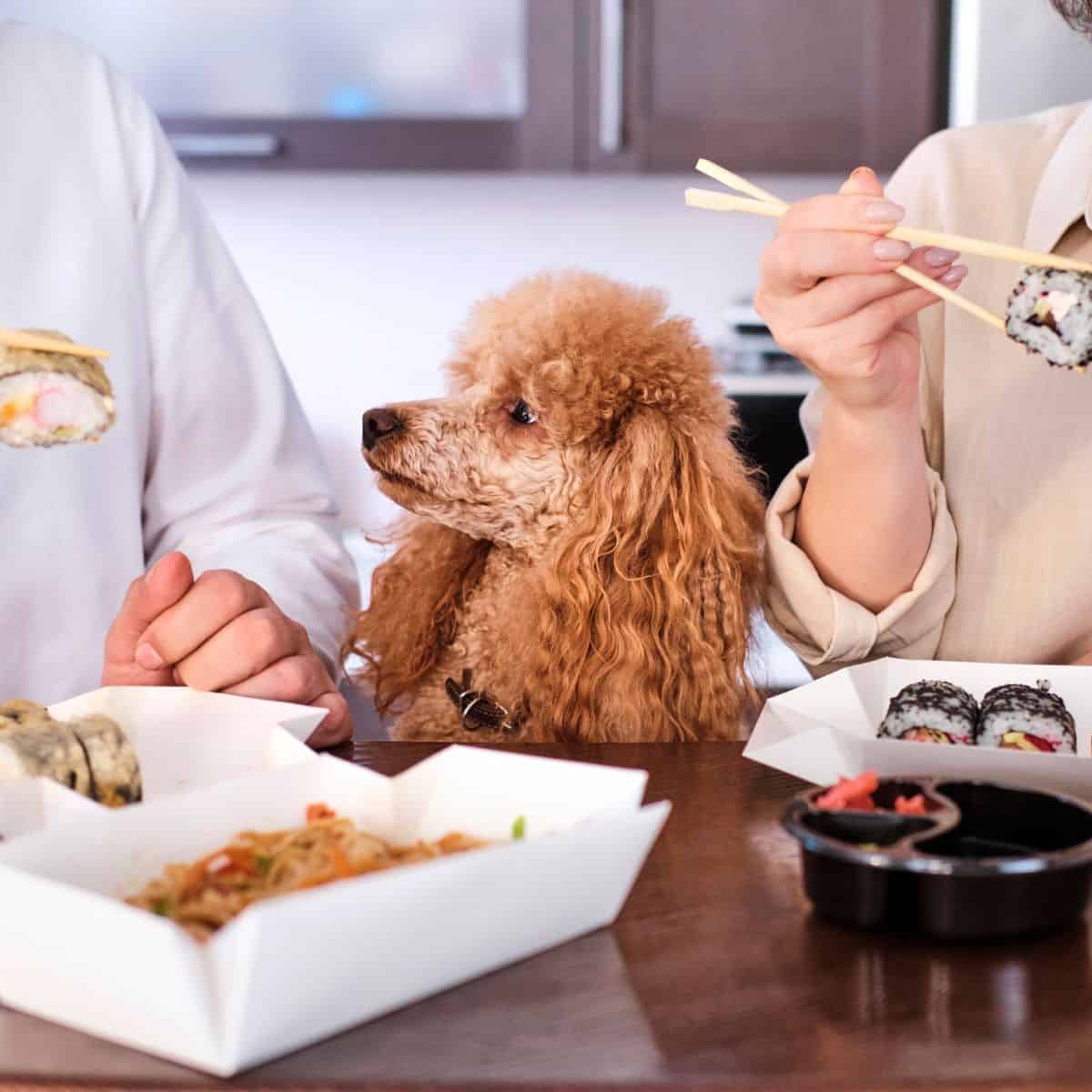
Many dog owners have wondered at some point: Can dogs have soy sauce? It’s a common question, especially when a curious pup sneaks a lick from a plate of rice or leftover takeout. Since soy sauce is a popular ingredient in many human meals, it’s understandable to wonder whether it’s safe for your furry friend.
Jump to:
In short, soy sauce isn’t considered a safe food for dogs. While a tiny accidental taste usually isn’t dangerous, soy sauce contains extremely high levels of sodium and salt, which can lead to health issues if a dog consumes too much. I’ve noticed that many dogs are drawn to the strong flavor of savory sauces, and soy sauce is no exception. Unfortunately, what tastes delicious to us can be overwhelming for a dog’s system.
In this guide, we’ll explore whether dogs eat soy sauce safely, why the ingredients can be problematic, what symptoms to watch for if your dog ate soy sauce, and safer ways to protect your pup’s nutrition and health.
Can Dogs Have Soy Sauce Safely?
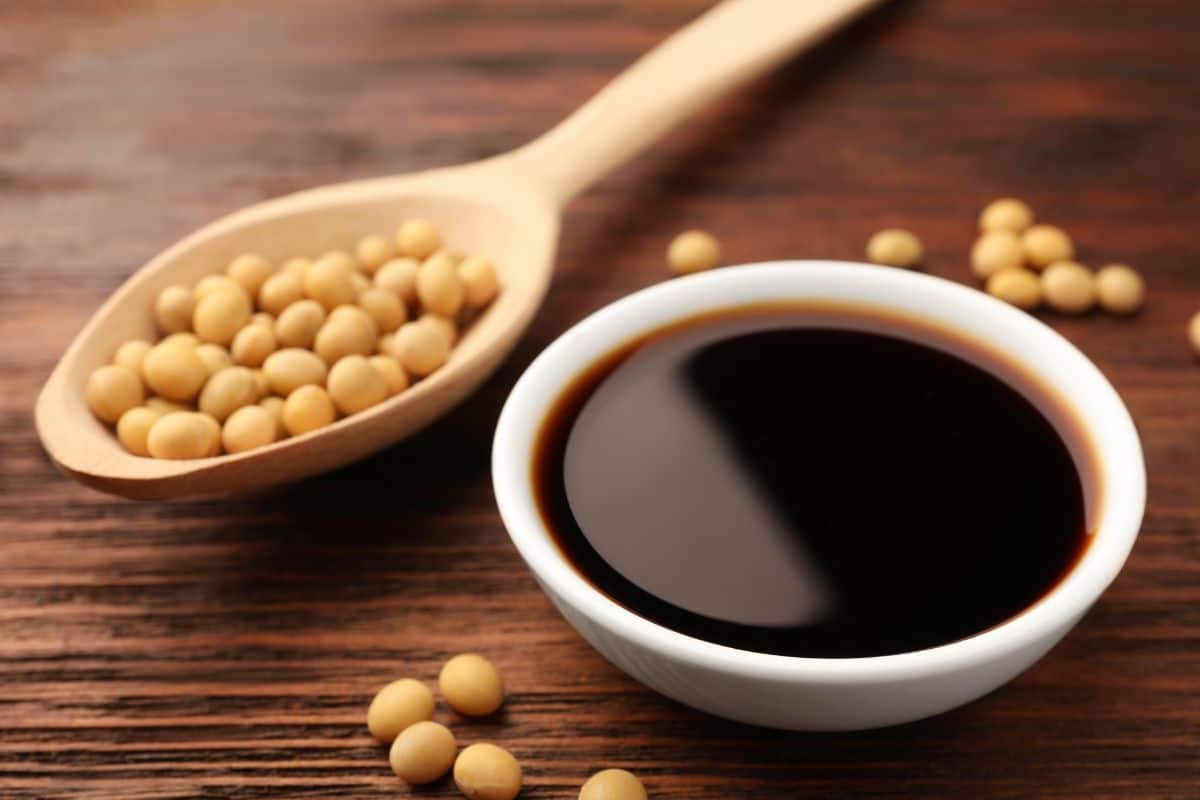
The simple answer to whether dogs can have soy sauce is no; it’s best to avoid giving it to them intentionally. Soy sauce is made from fermented soybeans, wheat, water, and a significant amount of salt. The sodium content in even a small amount of sauce is far higher than what most dogs should consume.
Dogs have very different nutritional needs compared to humans. Their dog food is carefully formulated to provide balanced nutrition without excess sodium. Adding salty human condiments like soy sauce can disrupt that balance.
In my experience, most dogs are attracted to the rich flavor of sauces on human meals, but that doesn’t mean they should eat them. Even a small splash of soy sauce on rice or meat can contain more sodium than a dog needs in an entire day.
While soybeans themselves aren’t necessarily toxic to dogs, the processed sauce is the problem. So, if you’re wondering if dogs can eat soy sauce, it’s safest to keep it completely off your dog’s plate.
Why Soy Sauce Is Bad for Dogs
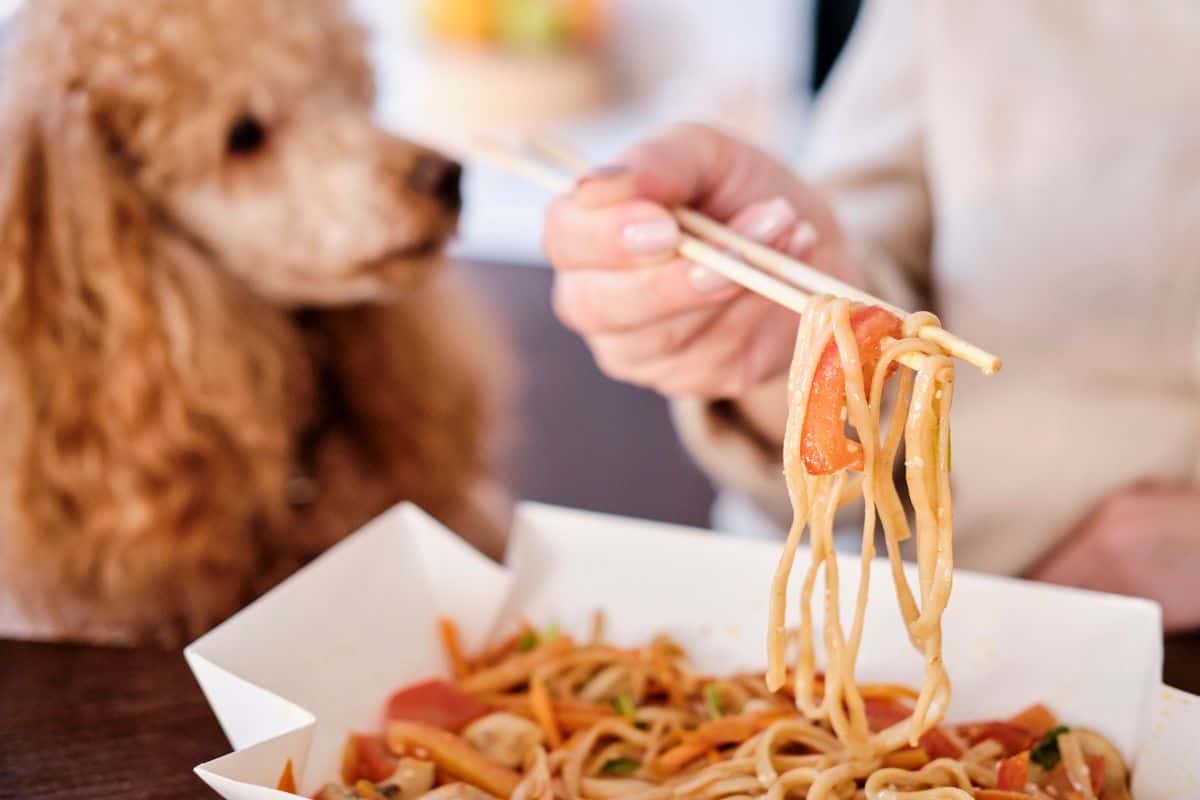
One of the main reasons people ask, “Is soy sauce bad for dogs?” is because they notice how salty it tastes. And that observation is correct, soy sauce is extremely concentrated in sodium.
High sodium content can lead to several potential health issues for dogs, including dehydration, excessive thirst, and digestive upset. Dogs that consume too much salt may experience symptoms such as vomiting, diarrhea, or lethargy.
When a dog consumes a large amount of salty food, the body may struggle to balance fluid levels. In severe cases, extremely high sodium intake can lead to salt poisoning, though this usually occurs only if a dog consumes a large amount of salty foods.
Another reason soy sauce isn’t ideal for dogs is that it offers no real nutritional benefit. Unlike healthy protein sources like meat, soy sauce doesn’t add meaningful nutrients to a dog’s diet.
I love how dogs happily explore new smells and tastes, but that curiosity sometimes leads them to foods that simply aren’t designed for canine health.

What Happens If a dog eats soy sauce?
If your dog ate soy sauce, don’t panic. Many dogs manage to sneak a lick of sauce from spilled takeout or leftover rice without serious problems.
However, the reaction depends on the amount consumed and the dog's size. A small dog that consumes a large quantity of soy sauce could be much more affected than a large breed that only has a drop.
Some possible symptoms after a dog eats too much soy sauce include:
Excessive thirst, vomiting, diarrhea, restlessness, or weakness.
In most minor cases, dogs simply drink more water and recover without lasting effects. Still, if your dog shows concerning symptoms or has consumed a large amount of soy sauce, it’s wise to contact a veterinarian for guidance.
I’ve noticed that many dogs who lick salty sauces immediately start drinking lots of water afterward, which is their body’s natural response to excess sodium.
The Dangers of Soy Sauce in Human Foods
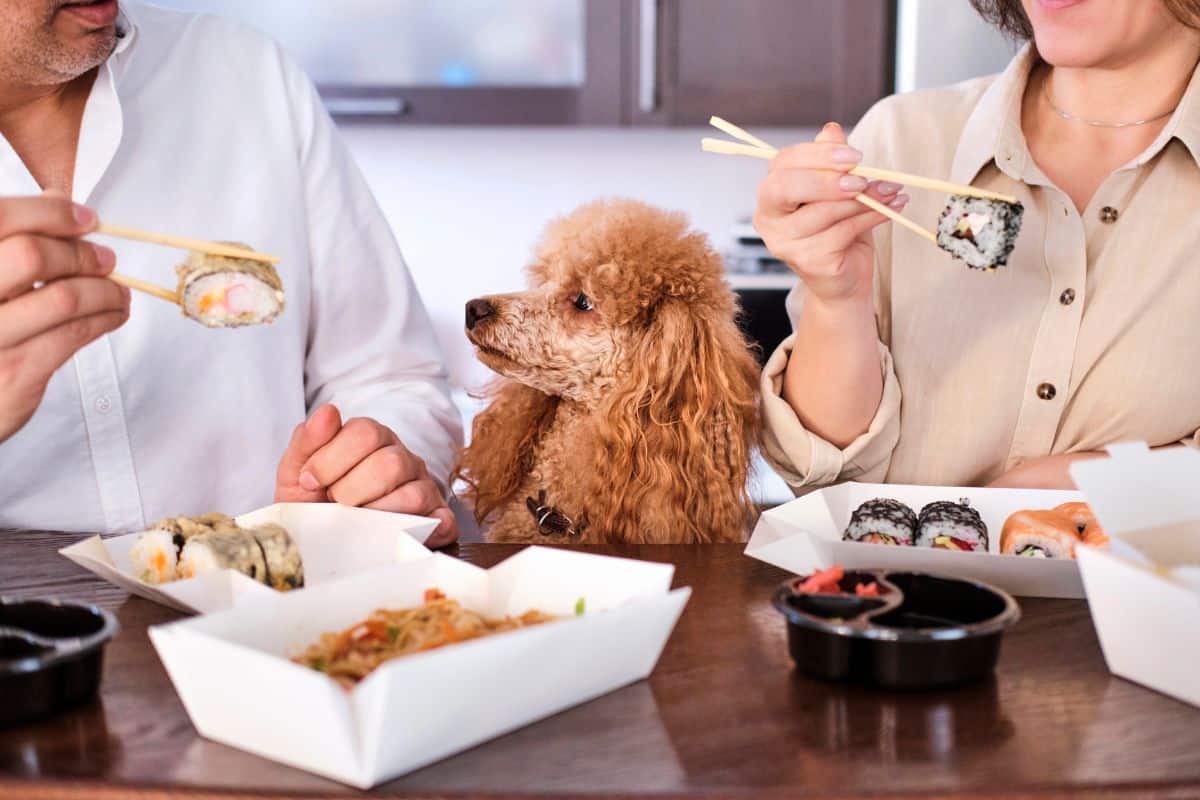
Another situation where soy sauce becomes an issue is when dogs sneak bites of human food, such as Chinese takeout or stir-fry dishes. Many recipes combine soy sauce with other sauces, spices, and ingredients that may not be ideal for dogs.
For example, dogs might encounter soy sauce in foods such as teriyaki chicken or fried rice. This leads many people to ask questions like “Can dogs eat teriyaki sauce?” or “Can dogs eat teriyaki chicken?”
These dishes often include additional ingredients such as garlic, onions, sugar, or oil. Some of these ingredients can be irritating or even toxic to dogs.
If your dog managed to grab a bite of takeout and you’re thinking, “My dog ate Chinese food,” the safest approach is to monitor them closely. A small bite of plain rice or meat is usually harmless, but sauces and seasonings are best avoided.
Keeping leftovers out of reach helps protect your curious furry companion from foods that may cause discomfort.
What To Do If Your Dog Eats Soy Sauce
If your furry friend accidentally eats soy sauce, a calm approach is usually best.
First, try to estimate how much sauce your dog consumed. A tiny lick off a plate is unlikely to cause significant harm. However, if your dog drank a noticeable amount from a bowl or bottle, it’s worth contacting a veterinarian.
Make sure your dog has access to fresh water. This helps dilute the sodium and supports hydration.
Watch for unusual symptoms such as vomiting, extreme thirst, confusion, or lack of energy. If any of these signs appear, professional advice is recommended.
In my experience, most dogs bounce back quickly after small accidental exposures. Still, prevention is always the safest choice when it comes to salty sauces.
Are There Safer Alternatives for Dogs?
Dog owners sometimes ask if options like low-sodium soy sauce are safer, or if dogs can eat foods like soy sauce chicken or rice with sauce.
Even reduced-sodium versions still contain far more salt than dogs need. Because of that, they’re not recommended for regular feeding.
If you want to add flavor to your dog’s meals, it’s better to use dog-safe options like plain cooked meat or a small amount of unsalted broth designed for pets.
Your dog’s regular dog food already provides balanced nutrition, so most pups don’t need extra flavoring. I love how excited dogs get for their meals, even simple ones, without any added sauces.
Final Thoughts
So, can dogs have soy sauce? The safest answer is no. While a tiny lick isn’t usually harmful, the high sodium content makes soy sauce a poor choice for dogs.
Keeping salty sauces and seasoned foods out of reach is a simple way to avoid unnecessary risks. Choosing balanced dog food and dog-safe treats helps support your dog’s long-term health and happiness.
FAQ
No, dogs can safely eat soy sauce only in extremely tiny accidental amounts. Because soy sauce contains very high levels of sodium, it should not be intentionally fed to dogs.
If your dog ate soy sauce, provide fresh water and monitor for symptoms like vomiting or excessive thirst. Contact your veterinarian if your dog has consumed a large amount or is showing unusual behavior.
It is very unlikely that a small taste would cause severe harm. However, consuming large quantities can lead to dangerously high sodium levels, which is why soy sauce should always be kept away from dogs.
Even when mixed with rice, soy sauce still contains a high salt content, so it’s best not to give rice with soy sauce to dogs.
Teriyaki sauce often contains soy sauce, garlic, sugar, and other ingredients that are not ideal for dogs. Plain cooked chicken without sauce is a safer choice for your dog. 🐾




Leave a Reply