
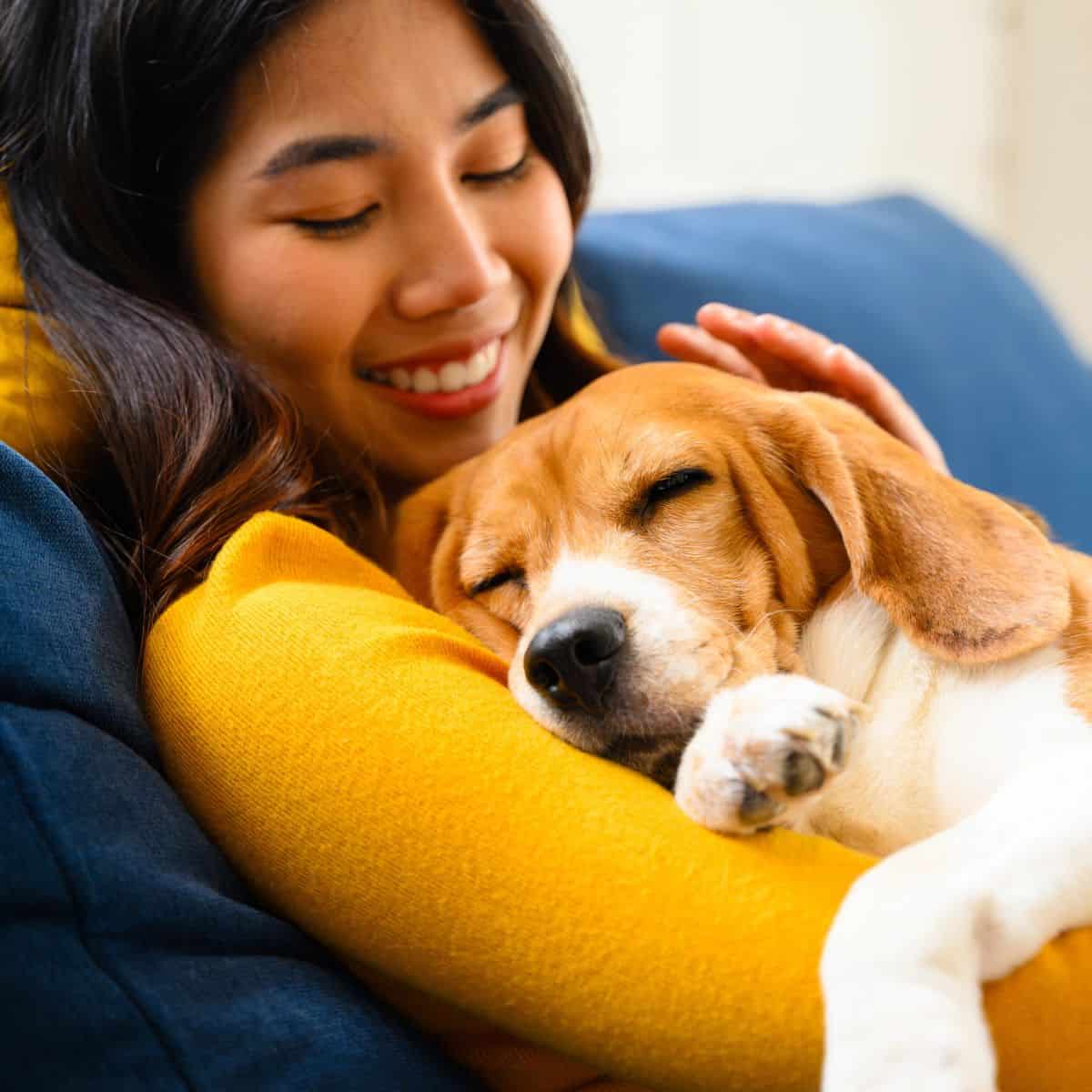
If you’ve ever been sitting on the couch, lying in bed, or trying to relax, only to find your dog fully stretched out on top of you, you’ve probably wondered, why does my dog lay on top of me? Not beside you. Not at your feet. Directly on you, as if you’re the comfiest spot in the house.
Jump to:
I love how this behavior feels equal parts sweet and slightly inconvenient. One minute it’s heart-melting, the next minute your leg is asleep and you’re afraid to move. But this habit isn’t random. Dogs don’t do much without a reason, especially when it comes to closeness, comfort, and connection.
Let’s walk through what this behavior really means and why your dog keeps choosing you.
It’s About Comfort and Warmth
One of the simplest reasons a dog lies or lies on top of their owner is comfort. Dogs naturally seek out warm, soft places to rest, and your body provides both.
I’ve noticed this happens more often during colder months or late at night when everyone is settling down. Your dog isn’t trying to smother you; they’re just choosing the warmest, safest place they know.
This is closely tied to dog sleep habits. Dogs instinctively curl up where they feel secure, and warmth plays a big role in the quality of their sleep.
Pack Mentality and Bonding
Dogs are pack animals by nature. Even though our homes look nothing like the wild, the pack mentality still deeply influences dog behavior.
When your dog is lying on top of you, it’s often a sign of trust and bonding. In their mind, you’re part of their pack, possibly even the leader. Physical closeness reinforces that bond.
I love how dogs don’t overthink affection. They don’t need words or explanations. If they want to feel close, they simply are. This kind of bond is one of the most beautiful parts of sharing life with dogs.
Seeking Attention or Reassurance
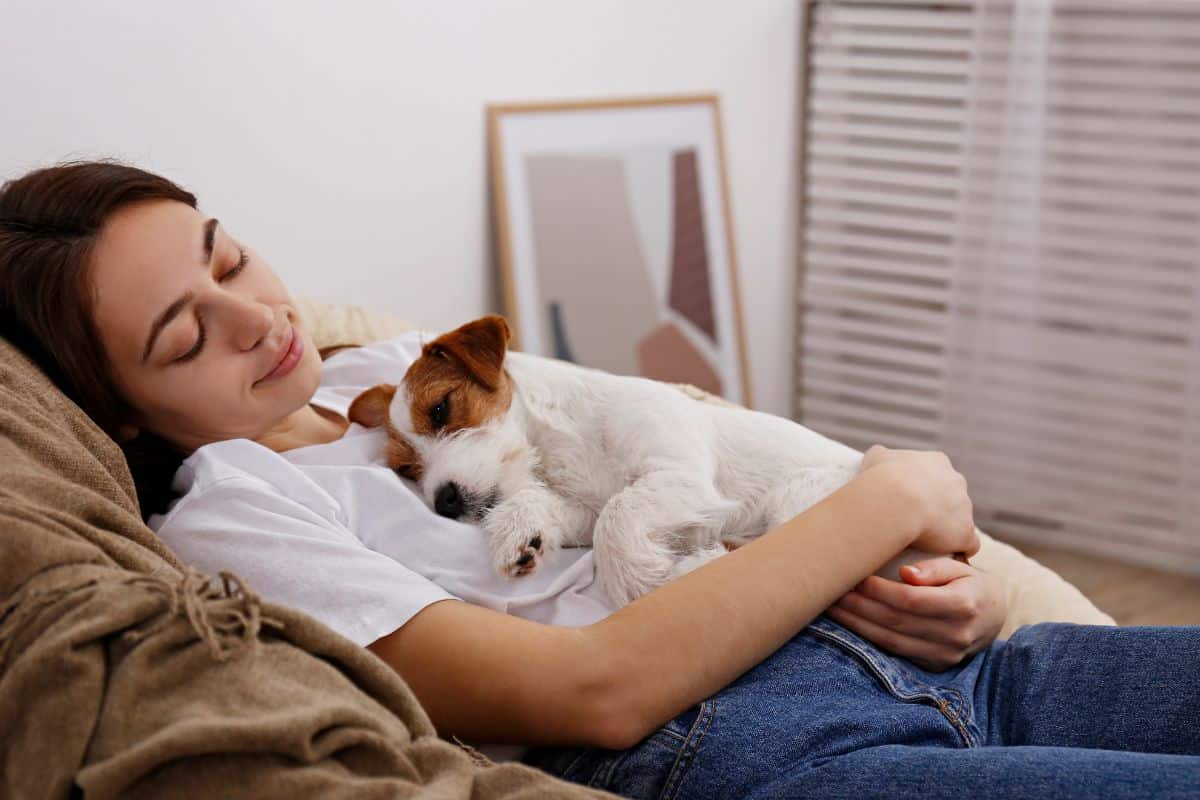
Sometimes, the answer to why does my dog lay on top of me is simple: they want your attention.
Dogs quickly learn that climbing onto you:
- Gets them petted
- Gets eye contact
- Gets a reaction
Even if you gently push them off, that’s still interaction. For dogs who crave closeness, being physically on you is a guaranteed way to connect.
This is especially common in dogs who are very people-oriented or who don’t like being ignored. Your dog may not need anything specific; they just want to be near you and feel noticed.
Separation Anxiety or Emotional Security
For some dogs, this behavior goes deeper. Dogs dealing with separation anxiety or general anxiety may seek constant physical contact to self-soothe.
Lying on top of you can help them:
- Regulate emotions
- Feel calm and grounded
- Reduce stress during rest or sleep
I’ve noticed that dogs who follow their owners from room to room are more likely to do this. It’s not clingy behavior; it’s a coping strategy. Your presence is comforting, and your dog feels safest when they’re close enough to feel you breathe.
You’re Their Favorite Snuggle Buddy
Let’s be honest, sometimes your dog lays on you because they genuinely love you.
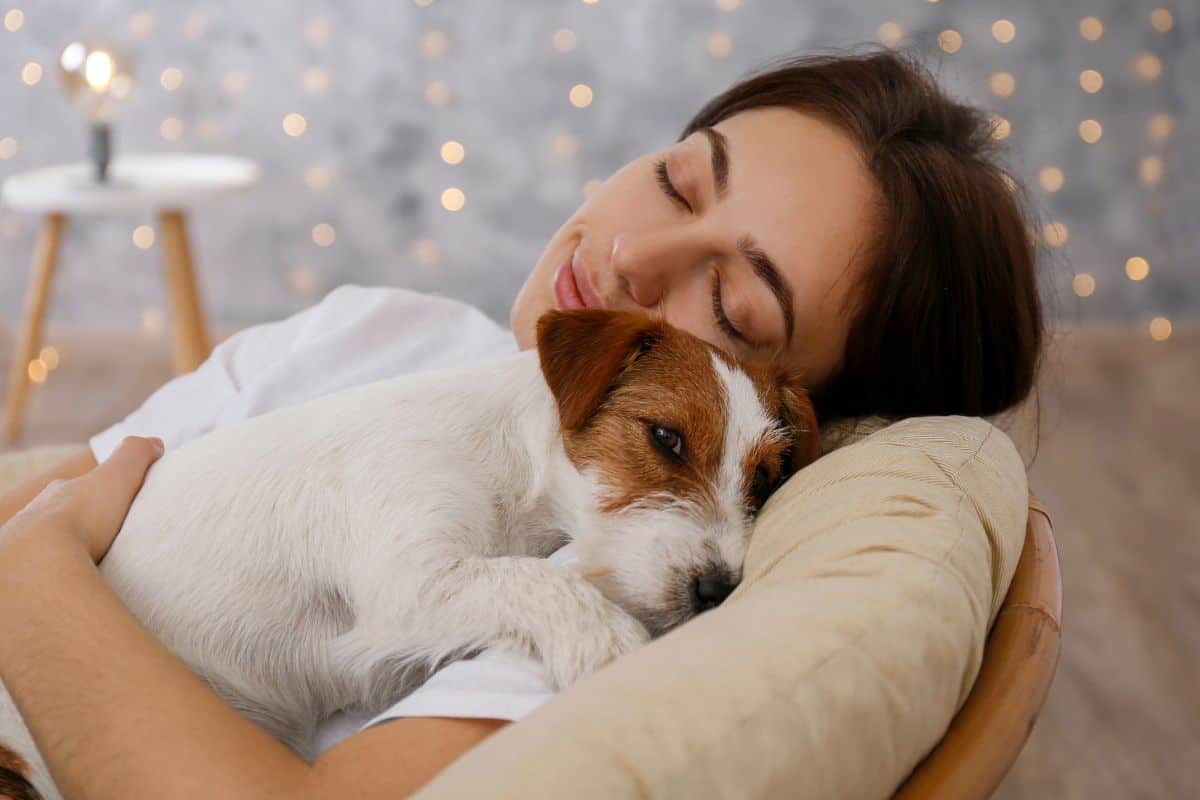
You’re their favorite snuggle buddy. You smell familiar. You feel safe. You’re home.
Dogs don’t separate affection from daily life the way humans do. To them, closeness equals love. If your dog curls up on your chest, stomach, or legs, it’s a quiet way of saying, “You’re my person.”
I love how dogs don’t save affection for special moments. They offer it freely, often, and without hesitation.
Protective or Guarding Instincts
In some cases, this behavior connects to guarding instincts. Dogs may position themselves on top of their owners as a subtle form of protection.
This doesn’t always mean resource guarding in a negative sense. Often, it’s simply your dog placing themselves between you and the rest of the world, especially during sleep or quiet moments.
That said, if the behavior becomes tense or possessive (such as growling when others approach), it’s worth paying attention. Healthy affection feels relaxed, not controlling.

Habit and Routine
Dogs thrive on routine. If your dog has learned that lying on you is part of their daily rhythm, morning cuddles, evening TV time, and bedtime, it can simply become a habit.
Once a dog realizes, “This is where I rest,” they’ll return to it again and again. Dogs don’t overcomplicate comfort. If something works, they repeat it.
Is It Ever a Problem?
Most of the time, no. This behavior is normal, affectionate, and harmless.
It may be worth adjusting if:
- Your dog becomes anxious when not allowed to lie on you
- The behavior interferes with healthy independence
- Guarding or possessiveness shows up
Otherwise, it’s just one of the many quirky ways dogs show connection.

Dog Sleep Positions Say a Lot
How dogs sleep and where they choose to rest often reflect emotional needs. A dog who lies on top of you during dog sleep hours is expressing trust, closeness, and emotional security.
Dogs who feel safe don’t feel the need to stay alert. They rest deeply, and often right on their favorite human.
Final Thoughts
So, why does my dog lay on top of me? Most of the time, it comes down to love, comfort, and trust.
I love how this behavior reminds us that dogs experience the world through connection. They don’t overthink closeness; they lean into it. Literally.
Whether your dog is seeking warmth, reassurance, attention, or simply a good nap, lying on you is their way of saying, “This is where I feel safe.” And honestly, that’s a pretty special feeling, even if your legs fall asleep sometimes.

FAQ
Yes. For most dogs, this behavior is completely normal and often a sign of affection, trust, and comfort. Many dogs simply feel safest when they’re physically close to their owners.
Dogs often look for comfort when they sleep. Curling up with you gives them warmth and a sense of safety, helping them relax and settle in for deeper rest.
Not always. While some dogs with separation anxiety may seek extra closeness, many dogs lay on their owners simply because they enjoy the bond. It’s only a concern if your dog becomes distressed when you’re apart.
Sometimes, dogs position themselves close as a form of gentle guarding, but this isn’t the same as resource guarding unless it includes growling or possessive behavior. Calm, relaxed laying is usually just affection.
You don’t need to stop it unless it makes you uncomfortable or causes anxiety when you set boundaries. Teaching your dog to also settle nearby helps balance independence with closeness.



Leave a Reply