
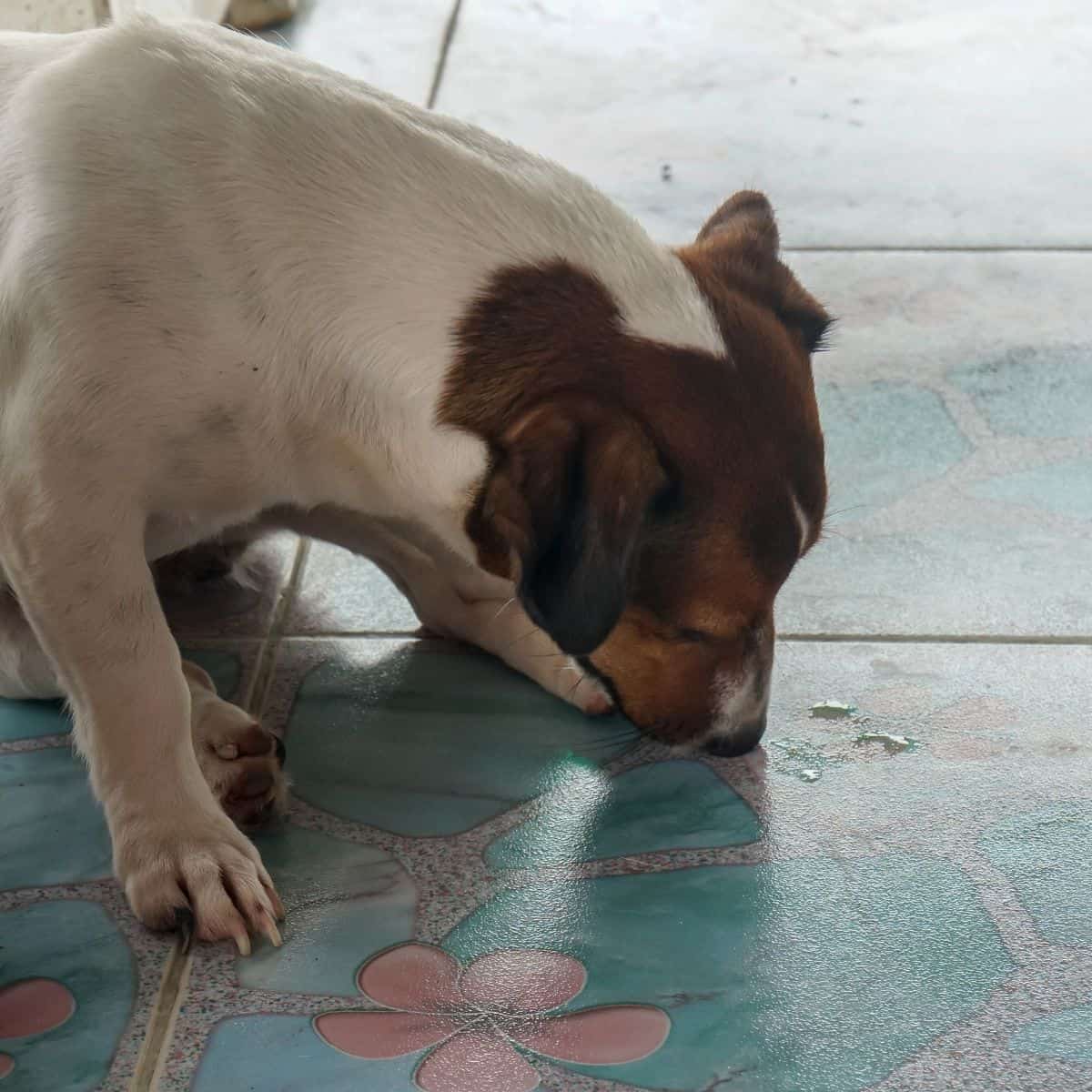
If you’ve ever caught your dog slowly licking the floor and wondered what on earth is going on, you’re not alone. I love how dogs can turn the most ordinary moments into head-scratchers, and I’ve noticed that dog licking the floor is one of those things that makes dog parents pause mid-step and think, “Should I be worried?” Sometimes it’s harmless, sometimes it’s annoying, and sometimes it’s your dog’s way of telling you something isn’t quite right.
Jump to:
This post will outline the most common reasons dogs lick the floor and how you can gently help them stop if it becomes a habit.
What Floor Licking Usually Means
At its core, floor licking is a form of communication or self-soothing. Dogs experience the world with their mouths, so dog licking is as natural to them as touching something with their hands.
I’ve seen that many dogs start licking after meals, during quiet moments, or when they’re feeling unsure. It’s not always about the floor itself; it’s often about what the behavior provides emotionally or physically.
For some dogs, licking is comforting. It can become a soothing behavior, especially during stressful times or when routines change. For others, it’s driven by curiosity, leftover smells, or even crumbs you didn’t realize were there.
Boredom and Mental Stimulation
One of the most common reasons dogs lick the floor is boredom. I love how dogs are honest about their need for mental stimulation, and when they don’t get enough, they’ll invent their own activities. Licking floor surfaces can become a way to pass the time, especially for dogs who spend long stretches alone or don’t get enough enrichment.
When dogs lack stimulation, repetitive behaviors like excessive licking can show up. Adding puzzle toys, short training sessions, or even stating a routine helps redirect that energy into something more productive and satisfying.
Stress, Anxiety, and Emotional Comfort
Stress plays a big role in the dog licking the floor behavior. I’ve noticed dogs often lick more during thunderstorms, when visitors are over, or after changes like moving homes or schedule shifts. Licking releases endorphins, which help dogs calm themselves, making it a natural response to stress.
In these cases, licking isn’t misbehavior; it’s coping. Understanding this helps you respond with patience instead of frustration. Creating a calm environment, predictable routines, and safe spaces can reduce the need for this soothing behavior over time.
Diet and Food-Related Reasons
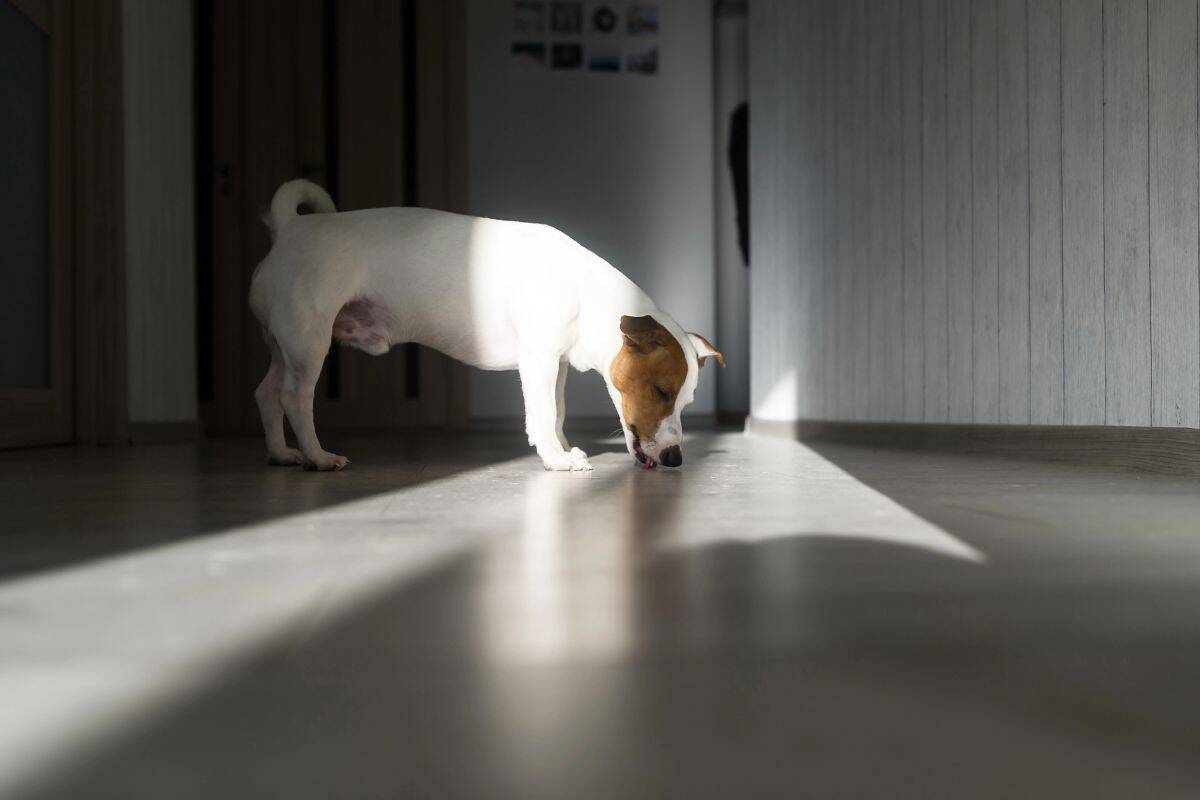
Sometimes, floor licking is linked to food and diet. Dogs have sensitive digestive systems, and an upset stomach can trigger licking behaviors. I’ve noticed some dogs start licking the floor more after eating new treats or table scraps. They may be searching for relief or reacting to mild discomfort.
Strong food smells can also be a factor. If you’ve ever dropped cookies, smeared peanut butter, or cooked something aromatic, your dog’s nose will find it even if you already cleaned. To them, the floor might still smell like a snack worth investigating.
Upset Stomach and Digestive Discomfort
A more specific cause of dog licking is stomach discomfort. Dogs with an upset stomach may lick surfaces to cope with nausea. This behavior is sometimes linked to acid reflux or mild digestive irritation. I’ve noticed dogs often lick more in the early morning or late at night when their stomach is empty.
If floor licking is accompanied by other signs such as drooling, grass eating, or restlessness, it may indicate digestive issues rather than a habit. Keeping meals consistent and avoiding sudden diet changes can help reduce these episodes.
Possible Health Issues to Watch For
Occasional licking is normal, but excessive licking may indicate underlying health issues. I’ve learned that persistent dog licking of the floor may be associated with allergies, pain, or neurological concerns in rare cases. If the behavior seems sudden, intense, or paired with changes in appetite or mood, it’s worth paying attention.
A vet visit can help check for health-related reasons, especially if the licking seems excessive or starts affecting everyday routines. It’s okay to trust your gut; owners often notice when something isn’t quite right.
Training and Redirecting the Behavior
When floor licking becomes a habit, gentle training can help. I love how small changes make a big difference here. Redirect your dog with a toy, a short walk, or a cue they already know. The goal isn’t punishment; it's to teach them a better outlet for their needs.
Consistency matters. If licking happens at the same time each day, look for patterns. Is it before meals? After play? During quiet evenings? Once you identify the trigger, you can provide an alternative before the behavior starts.
When to Be Concerned
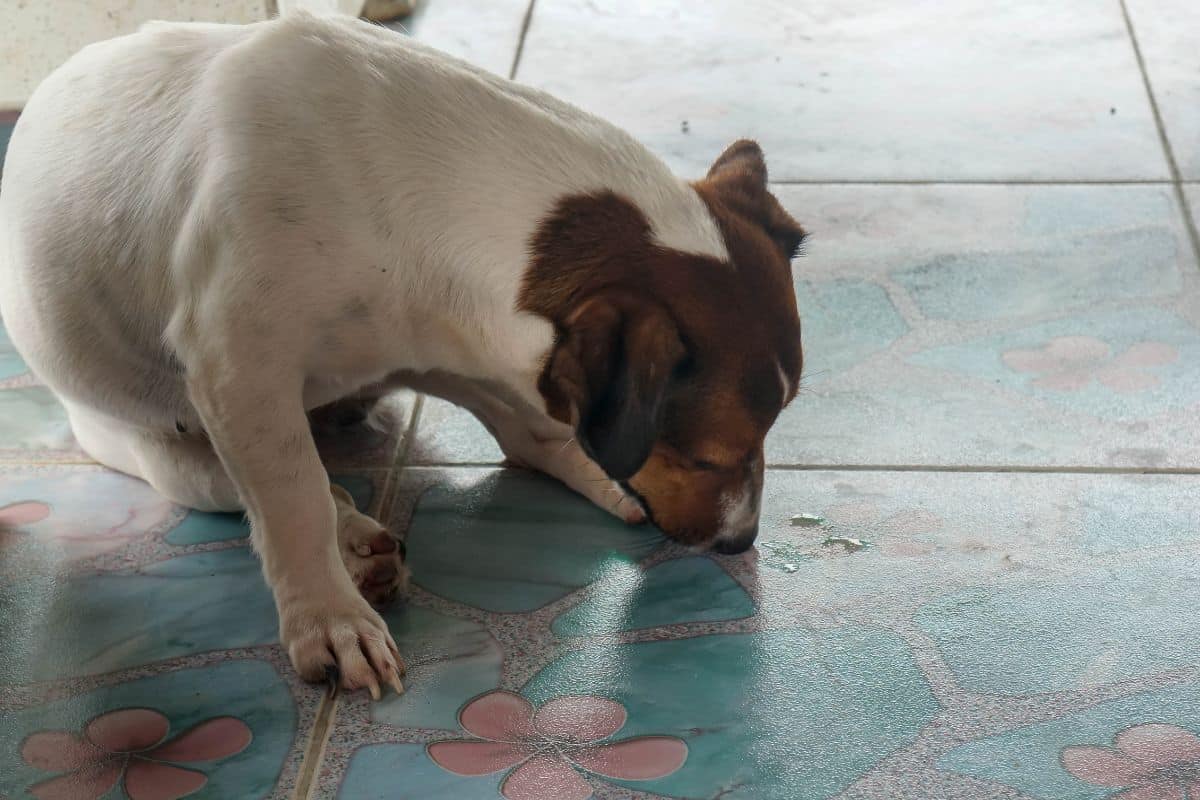
Most of the time, dogs lick floors for simple reasons. But if you notice nonstop licking, weight loss, appetite changes, or signs of pain, it’s time to consult a veterinarian. Chronic floor licking combined with digestive or behavioral changes may indicate deeper health or anxiety-related issues.
It’s always better to check and find nothing than to ignore a signal your dog is sending.
Final Thoughts
So, why does your dog lick the floor? The reason is often a mix of curiosity, comfort, boredom, or mild discomfort. Understanding the “why” makes it easier to respond with patience and care.
With simple observation, gentle training, and support when needed, most dogs naturally move past floor licking. Often, they just need routine, reassurance, and a sense of safety.
FAQ
When you see a dog licking the floor often, it’s usually due to boredom, stress, leftover food smells, or a need for comfort. For many dogs, licking the floor is a soothing behavior that helps them relax during quiet or stressful moments.
Yes, occasional floor licking is normal. Dogs explore the world with their mouths, so dog licking can be a natural response to interesting smells or textures. It becomes a concern only if it becomes excessive or occurs frequently.
Absolutely. Dogs with an upset stomach sometimes lick surfaces to cope with nausea or discomfort. If floor licking occurs alongside restlessness, drooling, or changes in appetite, stomach issues may be involved.
Yes. Even when the floor appears clean, dogs can detect traces of food such as cookies, sauces, or peanut butter. To them, the floor may still smell interesting enough to investigate with their tongue.
Stress is a common trigger for the dog licking the floor behavior. Changes in routine, loud noises, or new environments can cause dogs to lick the floor as a calming habit. This soothing behavior helps dogs manage anxiety and feel more secure.
If your dog shows excessive licking, sudden behavior changes, weight loss, or signs of pain, it’s time to consult a veterinarian. Persistent licking may indicate underlying medical or health issues.
Yes. Keeping meals consistent and avoiding sudden diet changes can help prevent stomach discomfort that often leads to licking. If your dog has frequent digestive upset, reviewing their food with your vet may help.
Many dogs naturally stop floor licking once their needs are met and stress levels improve. With patience, routine, and attention to your dog’s behavior, this habit often fades.




Leave a Reply