
If you’ve ever wondered, why does my dog lick my face, you’re definitely not alone. This common behavior is something many dog owners experience daily, especially during those sweet reunions after being apart. In the world of dog behavior, licking faces can feel like a loving gesture, but it can also leave you curious about what your dog is really trying to say.

Jump to:
- Dog Behavior Licking Faces: Why Does My Dog Lick My Face?
- Why Does My Dog Lick My Face When I Come Home or Wake Up?
- Why Does My Dog Lick My Face When I Cry or Show Emotion?
- Excessive Licking: When Face Licking Becomes Too Much
- Why Does My Dog Lick My Face So Much or Aggressively?
- Can You Stop Dog Licking? Gentle Training Tips
- Is It Safe for Dogs to Lick Your Face?
- Final Thoughts
- FAQ
- You May Also Like
I’ve noticed over time that when dogs lick, especially when they lick their face, it often comes with wagging tails and soft eyes. It feels affectionate, but there’s usually more behind the behavior than just simple love. Understanding your dog’s body language and intentions can help you respond in a way that supports both their behavior and your comfort.
Let’s explore what’s really going on when your dog licks your face and what it might mean in different situations.
Dog Behavior Licking Faces: Why Does My Dog Lick My Face?
At its core, dog licking is a natural and instinctive behavior. From puppyhood, dogs use licking to communicate and connect. When your dog licks your face, it can be a blend of instinct, emotion, and learned habits.
In my experience, one of the most common reasons dogs lick is to show affection. Much like a gentle nuzzle, a dog lick can be your pet’s way of bonding with you. It’s their version of saying, “I’m happy you’re here.”
However, licking can also be influenced by taste. Human skin can carry traces of salt from sweat or even food particles, yes, even something as simple as crumbs or cookies can linger. To your dog, your face might just taste interesting.
Over time, dogs also learn that licking gets a reaction. Whether you laugh, talk to them, or gently push them away, they interpret it as attention, reinforcing the behavior.
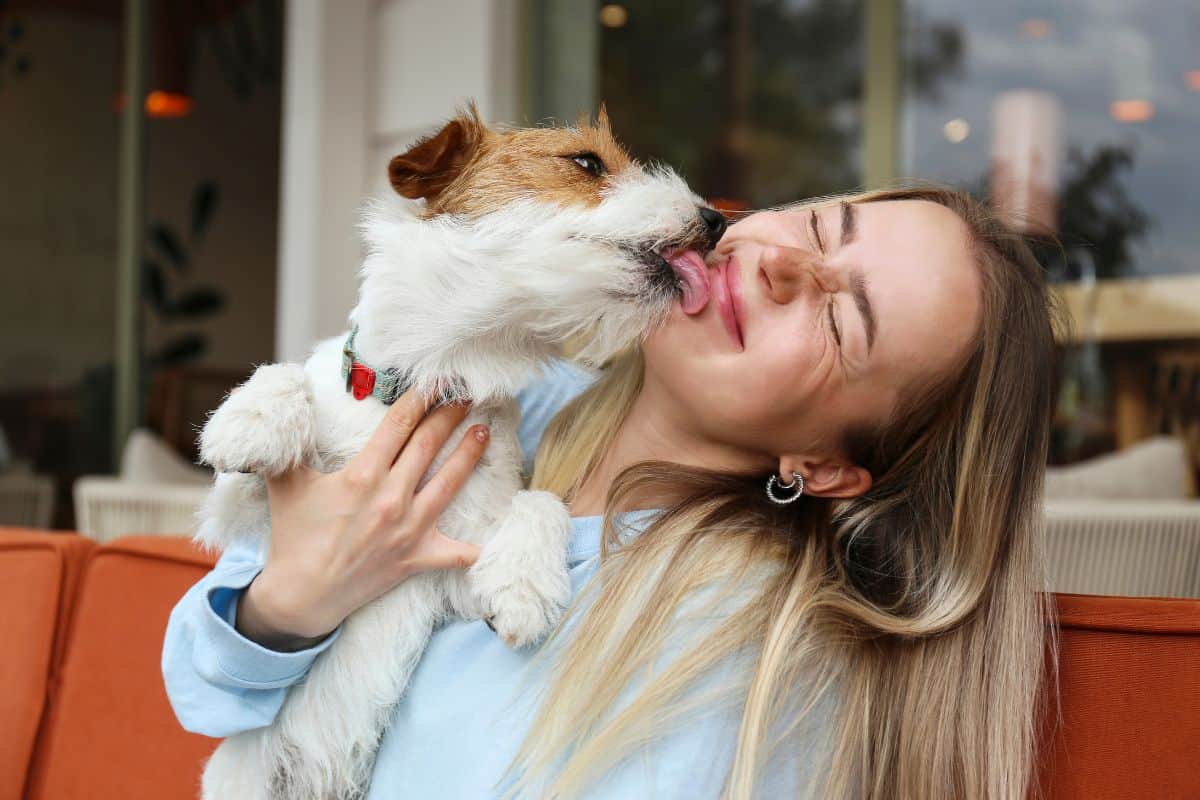
Why Does My Dog Lick My Face When I Come Home or Wake Up?
Many owners notice their dog licking their face at specific times, such as when they come home, wake up, or lie down. These moments are emotionally meaningful for your dog.
When you return home, your dog may lick your face as part of a greeting ritual. This behavior is rooted in pack instincts, in which dogs greet each other by licking. It’s a mix of excitement, relief, and connection.
I love how dogs express such pure joy in these moments. When your dog licks you first thing in the morning, it may simply be their way of saying, “I missed you,” even if you were only apart for a few hours.
Similarly, if your dog licks your face when you lie down or at night, it can signal comfort and closeness. Your calm state invites them to engage in bonding behavior.
Why Does My Dog Lick My Face When I Cry or Show Emotion?
Dogs are incredibly perceptive when it comes to human emotions. If your dog licks your face when you cry, it may be their way of responding to your feelings.
In many cases, this behavior is tied to empathy. Your dog senses a change in your tone, posture, or scent and responds by licking, a soothing behavior. It’s a gentle attempt to comfort you.
I’ve noticed that dogs often become more attentive during emotional moments. A dog licking your face during these times may reflect both concern and a desire to reconnect.
This is a beautiful example of how deeply connected dogs are to us, not just physically, but emotionally as well.
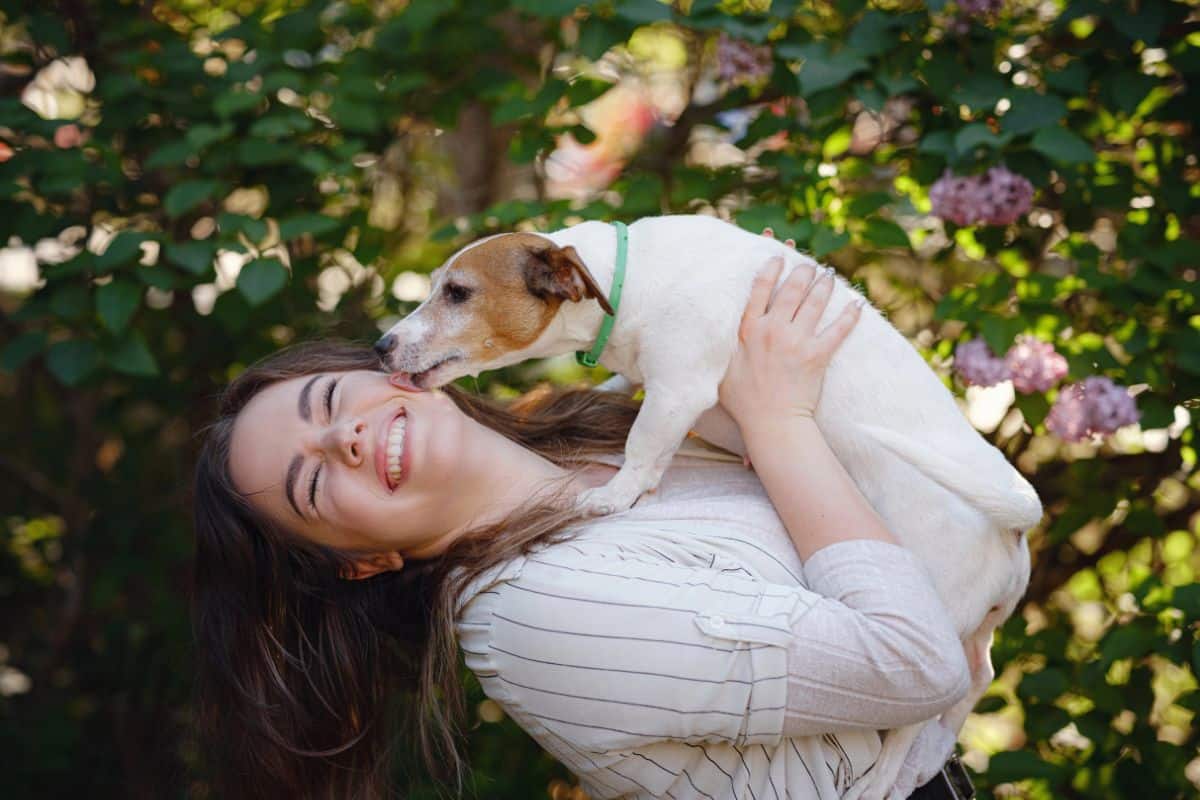
Excessive Licking: When Face Licking Becomes Too Much
While face licking is usually harmless, excessive licking can sometimes become a concern. If your dog licks your face constantly or intensely, it may signal something beyond simple affection.
In some cases, excessive dog licking may be linked to anxiety or a need for reassurance. Dogs may use repetitive licking as a self-soothing behavior. It can also stem from boredom or lack of stimulation.
Health can also play a role. Occasionally, changes in behavior, such as increased licking, may be worth paying attention to, especially if they appear suddenly or are accompanied by other signs.
If you ever feel unsure, it’s always a good idea to gently observe patterns over time and consult a professional if needed.
Why Does My Dog Lick My Face So Much or Aggressively?
If your dog seems to lick your face very frequently or more intensely, it may be a mix of excitement and learned behavior. Dogs that receive strong reactions, such as laughter or petting, may repeat the behavior more often.
Sometimes what feels like “aggressive” licking is actually overstimulation. Your dog may simply be overwhelmed with excitement or seeking attention.
In my experience, understanding your dog’s body language is key here. If their posture is relaxed and happy, the licking is likely playful. If it feels frantic or persistent, it may be time to gently guide them toward calmer interactions.
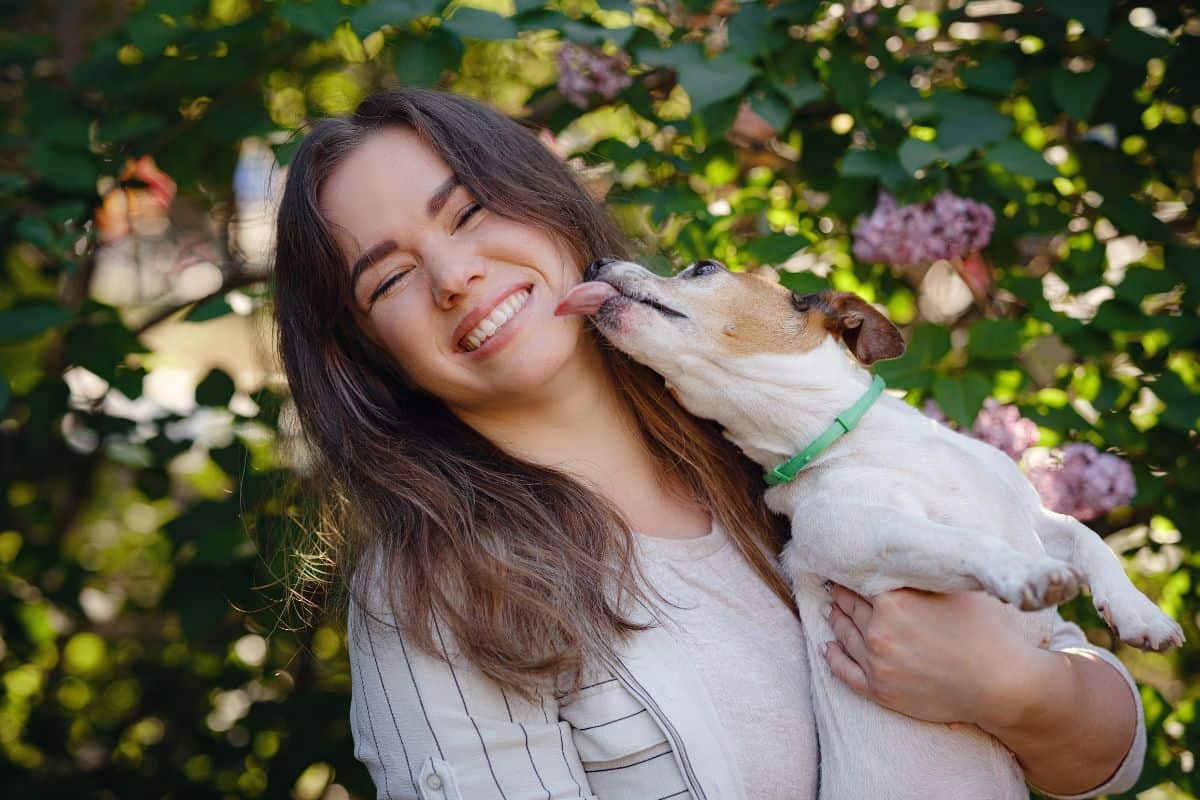
Can You Stop Dog Licking? Gentle Training Tips
If you’re wondering how to stop your dog from licking your face, the good news is that dog training can help shape this behavior without harming your bond.
Consistency is important. Dogs learn through repetition, so calmly redirecting them each time they try to lick their face can help. You might turn your head away or offer an alternative, like a toy or a command they know.
Training works best when it’s positive. Reward your dog when they greet you calmly without licking. Over time, they’ll begin to understand what behavior earns your approval.
I’ve found that small, gentle adjustments can make a big difference. Your dog still feels loved and connected, just in a way that works better for both of you.
Is It Safe for Dogs to Lick Your Face?
From a general health perspective, occasional face licking is usually harmless for most people. However, it’s still wise to be mindful, especially around sensitive areas like the mouth, nose, or eyes.
Good hygiene and awareness go a long way. If you prefer not to have your dog lick your face, it’s perfectly okay to set that boundary through training.
Your comfort matters just as much as your dog’s natural instincts.

Final Thoughts
So, why does your dog lick your face? In many cases, it’s simply part of how dogs interact with the people they love. Face licking can be linked to affection, excitement, attention-seeking, comfort, or even simple curiosity.
I’ve always found this behavior interesting because the same action can mean slightly different things depending on the dog and the situation. Some dogs greet with kisses, while others use licking to seek reassurance or closeness.
As long as the behavior stays gentle and manageable, face licking is usually a normal part of dog communication. With consistent boundaries and a little training, you can encourage healthy habits while still enjoying your bond with your dog.
FAQ
Dogs often lick as a greeting. It’s a sign of excitement, recognition, and happiness to see you again.
Morning licking face behavior is usually your dog’s way of reconnecting after sleep and seeking attention.
Dogs may lick in response to emotions. It can be a comforting behavior driven by sensitivity to your feelings.
Frequent licking may be due to habit, affection, or reinforced behavior. In some cases, it may also relate to anxiety or boredom.
Use gentle dog training techniques like redirection and positive reinforcement. Consistency over time is key.
Excessive licking can sometimes signal stress, need for attention, or a learned habit. Observing patterns can help you understand the cause.


Leave a Reply